
How Long Does Rehab Take? 30/60/90-Day Guide

How long is rehab? The simple answer is that structured addiction treatment may last a few weeks, several months, or longer. A residential stay is only one part of the timeline: assessment, withdrawal management, outpatient therapy, medication support, recovery housing, and aftercare may all contribute to the total period of care.
Thirty-, 60-, and 90-day programs are useful planning categories, but they should not function as automatic clinical deadlines. The right duration depends on a person’s substance use, physical and mental health, safety risks, home environment, progress, and access to continuing care. For an overview of what happens during treatment, start with What Is Rehab? A Complete Guide to Addiction Treatment.
Why program length varies so much
Addiction treatment is not a single standardized course. One person may need medically supervised withdrawal followed by residential care, while another may be safely treated through an intensive outpatient program. The American Society of Addiction Medicine, or ASAM, recommends matching people to care through a multidimensional assessment and adjusting the plan as their needs change. Its current guidance supports an individualized timeline rather than automatically discharging someone when a predetermined number of days has passed.
The word “rehab” can also refer to different parts of care. A centre may quote the length of its residential phase, while the full plan continues through outpatient counselling, medication appointments, peer support, or recovery monitoring. Ask whether withdrawal management is included in the advertised duration and what support follows discharge. The Levels of Care in Addiction Treatment: Detox to Aftercare guide explains how people can move between services without treating discharge as the end of recovery.
- Clinical assessment and stabilization needs
- The substance or substances involved and the pattern of use
- Physical health, mental health, and cognitive concerns
- Previous treatment experiences and returns to substance use
- Housing stability and exposure to triggers at home
- Progress toward treatment goals and ability to use new coping skills
- Availability of suitable outpatient care and long-term support
- Practical limits involving work, caregiving, travel, cost, or insurance
Do not choose a program length instead of seeking withdrawal advice
Suddenly stopping alcohol after prolonged heavy drinking can cause severe and potentially life-threatening withdrawal, including seizures. If withdrawal may be a concern, speak with a doctor or qualified admissions or clinical team before stopping. Call emergency services for seizures, loss of consciousness, severe confusion, breathing problems, or another immediate medical emergency.
30-day programs: pros and cons
A 30 day rehab program offers a concentrated period away from everyday access, pressures, and triggers. In the United States, SAMHSA data classifications have historically described short-term residential rehabilitation as 30 days or fewer, although individual facilities may structure and label their programs differently. During a brief stay, treatment may include assessment, individual and group therapy, health appointments, education, family involvement, and discharge planning.
The main advantage is accessibility. Thirty days may be easier to arrange around employment, family responsibilities, finances, or travel. It can provide enough time to begin stabilization, understand personal patterns, and establish an initial recovery plan. It may also be the residential component of a longer pathway rather than the complete treatment period.
- Potential advantages: shorter disruption to home and work, lower total residential cost, and a structured introduction to treatment
- Potential advantages: time to complete an assessment and begin evidence-based therapy in a substance-free setting
- Potential limitations: less time to practise coping strategies and work through complex clinical or social needs
- Potential limitations: discharge may arrive quickly, especially when withdrawal management occupies part of the stay
- Potential limitations: outcomes may depend heavily on a well-organized transition into outpatient treatment and recovery support
Thirty days should therefore be viewed as a possible starting point, not a universal definition of adequate treatment. Before enrolling, ask how frequently progress is reviewed, whether an extension is possible, and what the centre arranges next. The questions in How to Choose a Rehab Center: 10 Questions to Ask can help you evaluate more than the advertised number of days.
60-day programs: pros and cons
A 60-day program provides roughly twice the residential time of a 30-day stay. That additional period may allow treatment to move beyond immediate stabilization into repeated practice: recognising triggers, regulating emotions, repairing routines, involving supportive relatives, and planning for work or home life. It also gives the clinical team more opportunities to observe progress and revise the plan.
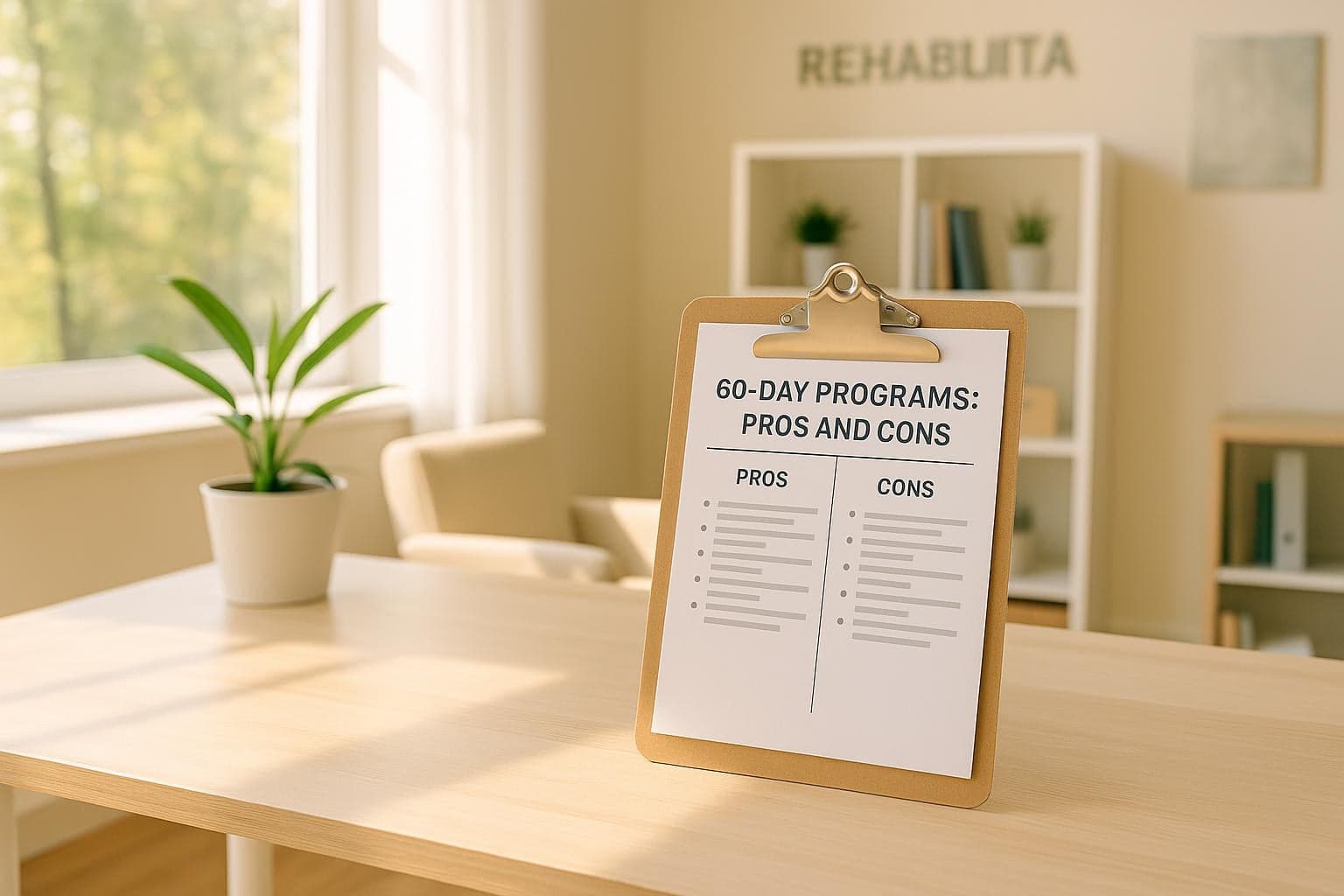
Sixty days can represent a middle ground for someone who needs more time than a brief stay provides but cannot commit to three months of residential treatment. However, the number itself does not guarantee greater quality. Two programs of equal length can differ substantially in clinical staffing, therapy time, medication access, treatment for co-occurring conditions, and discharge support. Explore Types of Therapy Used in Addiction Treatment and ask which approaches are actually provided, by whom, and how often.
- Potential advantages: more time to build a therapeutic relationship and identify recurring behavioural patterns
- Potential advantages: repeated opportunities to practise coping, communication, and relapse-prevention skills
- Potential advantages: additional time to coordinate medication, family work, housing, and continuing care when needed
- Potential limitations: greater cost and a longer absence from employment, education, or caregiving
- Potential limitations: insurance or other funding may not cover the full proposed stay
- Potential limitations: a longer residential phase still requires a realistic plan for life after discharge
If affordability is shaping the decision, compare the full expected cost rather than the daily rate alone. Ask about assessments, medications, medical services, family sessions, transport, and aftercare. See How Much Does Rehab Cost? Complete Price Guide 2026 and Does Insurance Cover Rehab? Complete Guide for related planning questions.
90-day+ programs: pros and cons, and why research tends to favor longer stays
A 90-day or longer program creates more time for structured therapy, skill development, health care coordination, and gradual preparation for greater independence. Longer care may be considered when substance use has been severe or long-standing, previous brief treatment has not provided enough stability, mental or physical health needs require coordination, or the home environment makes early discharge unsafe or difficult.
Research guidance generally supports adequate treatment exposure rather than a rigid promise that one duration works for everyone. The National Institute on Drug Abuse reports that, for most people with drug addiction, participation lasting at least three months is associated with meaningful reductions in or cessation of drug use, with longer treatment generally linked to better outcomes. Importantly, this refers to time engaged in treatment overall. It does not mean that everyone needs exactly 90 residential days; a 90 day rehab program length may combine residential treatment with outpatient care and continuing support.
- Potential advantages: more time to address substance use alongside medical, psychological, family, housing, or vocational needs
- Potential advantages: greater opportunity to rehearse recovery skills and respond to setbacks while support is readily available
- Potential advantages: more time to build a step-down plan and connect with community providers
- Potential limitations: higher total residential expense and a longer separation from usual responsibilities
- Potential limitations: extended residential care may be unnecessary when a less intensive setting can provide safe, effective treatment
- Potential limitations: remaining in a program without meaningful, individualized clinical work is not the same as receiving high-quality care
Recovery commonly continues well beyond formal residential care. NIAAA describes alcohol recovery as an ongoing process and recommends continuing follow-up for many people. A strong long-term plan may include outpatient therapy, appropriate medication, primary care, peer support, family support, and rapid re-entry into treatment if needs increase.
Factors that determine the right length for you
The safest decision begins with a clinical assessment rather than a preference for the shortest or longest package. ASAM’s framework considers withdrawal and medication needs, biomedical conditions, psychiatric and cognitive conditions, substance-related risks, the recovery environment, and person-centred considerations. These factors can influence both the intensity and duration of care.
Questions to review with the treatment team
- Do I need supervised withdrawal management before therapy begins?
- Are there physical health conditions that require monitoring or hospital-level services?
- Do depression, anxiety, trauma, psychosis, eating problems, or cognitive symptoms need integrated care?
- Have previous treatment episodes been too brief or followed by a rapid return to substance use?
- Is my current housing stable and supportive of recovery?
- Can I safely attend outpatient treatment, or do I need 24-hour structure for now?
- What measurable goals will be used to review my progress?
- What happens if I need more or less intensive care than originally expected?
- What continuing care will begin immediately after discharge?
- How will the proposed plan be funded if the recommended duration changes?
Treatment should be reassessed as new information emerges. ASAM describes regular review and movement to a less intensive, more intensive, or unchanged level of care according to current needs. Ask the centre how it handles extensions and step-down planning before admission. Practical preparation can also reduce avoidable stress; use What to Pack for Rehab: Complete Checklist once dates are confirmed.
Family members can support the process without deciding the clinical timeline themselves. If you are arranging care for someone else, How to Help a Loved One Get Into Rehab covers constructive conversations and admission planning. A doctor or qualified clinical team should advise on withdrawal, medication, and the safest level and length of treatment.
Comparison table
This table compares common planning categories rather than prescribing a stay. Actual services, eligibility, and timelines vary, and a person may move through several levels of care over the course of three months or more.
General comparison of 30-, 60-, and 90-day-plus rehab programs
| Program length | Possible strengths | Possible limitations | Questions to ask |
|---|---|---|---|
| 30 days | Brief period of structure; may be easier to arrange around responsibilities; can begin assessment, therapy, and discharge planning | Limited time for complex needs or repeated skill practice; withdrawal management may use part of the stay | Is detox included? What outpatient or aftercare service starts immediately afterward? |
| 60 days | More time for therapy, routine building, family work, and observing progress | Greater cost and disruption; quality still depends on staffing, services, and individualized planning | How is progress reviewed, and can I step down or extend if my needs change? |
| 90 days or longer | Allows sustained engagement and more time to address health, psychological, social, and environmental needs | Largest time and financial commitment; residential care may not be required for the entire period | Does the 90-day plan combine residential and outpatient care? What goals determine transitions? |
The key distinction
Program duration and treatment duration are not always the same. Someone may complete 30 residential days and remain actively engaged in outpatient treatment for several months. Focus on the full continuum, the quality of care, and how decisions will respond to progress—not only the number printed on a package.
Explore Rehabs by Location
Related Reading
Frequently Asked Questions
It can be enough for the initial residential phase for some people, but it is not automatically enough for the entire course of treatment. Suitability depends on withdrawal risk, substance-use severity, physical and mental health, previous treatment, home stability, progress, and the continuing-care plan. NIDA guidance indicates that many people with drug addiction benefit from at least three months of treatment overall, which may combine residential and outpatient services. Ask a qualified clinical team to assess your needs rather than choosing solely by calendar length.
Related Articles
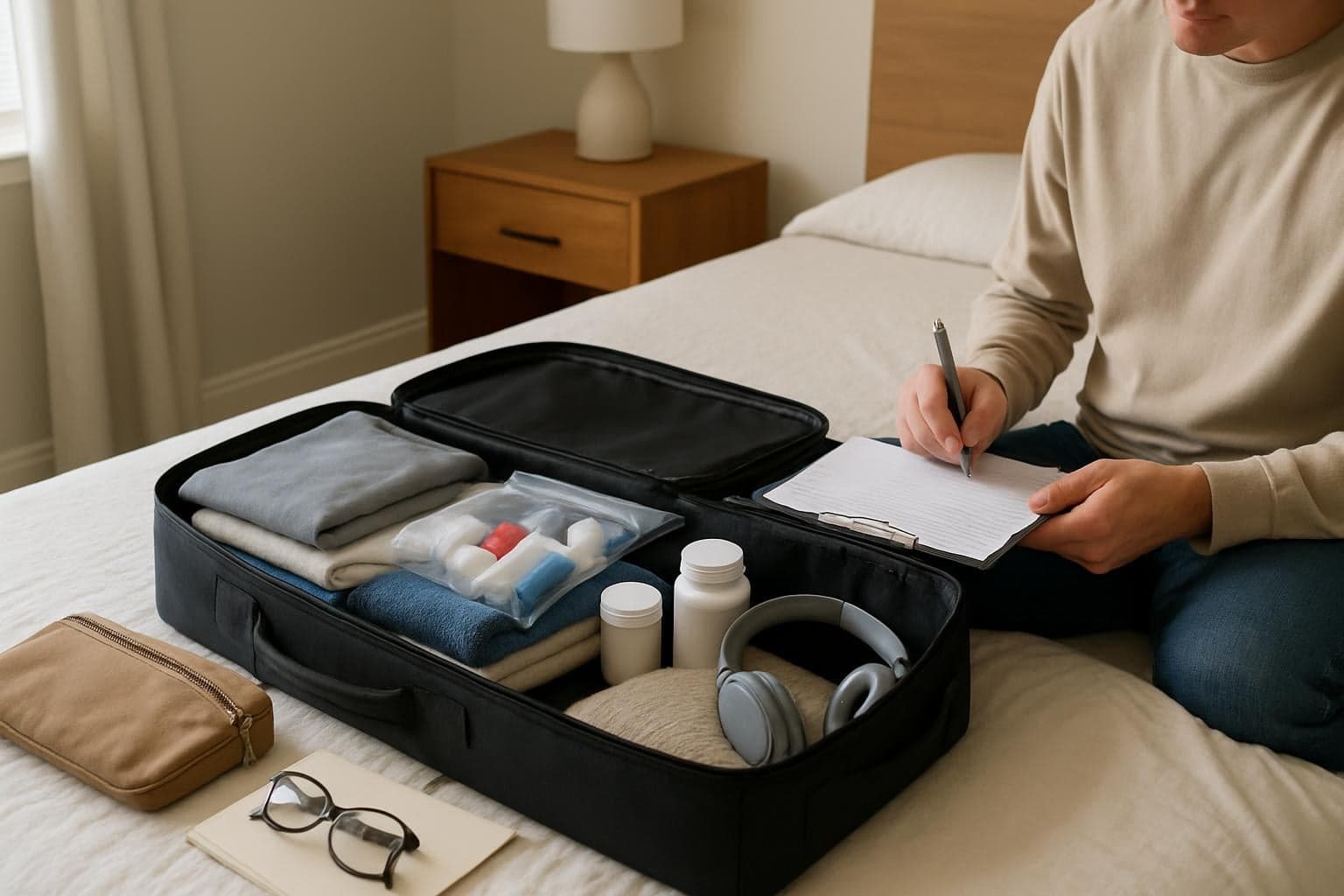
What to Pack for Rehab: Complete Checklist
Preparing for residential treatment can feel overwhelming, especially when different programs have different rules. A simple rehab packing list can make admission day calmer and he…

Sober Living Homes: What They Are & How to Choose One
A sober living home is a substance-free shared residence where people can build stability, routines, and supportive relationships during recovery. It can provide a practical bridge…

How to Stage an Intervention: Step-by-Step Guide
When someone you care about is living with addiction, it is natural to want one conversation that changes everything. An intervention can create an opportunity to accept help, but…