
What Is Rehab? A Complete Guide to Addiction Treatment

Rehab is a structured form of treatment that helps people change a harmful relationship with alcohol or other drugs. It may include medical care, medication, therapy, practical support, and planning for life after treatment. Although the word often brings to mind a residential facility, many people receive effective rehabilitation while continuing to live at home.
The short answer to “what is rehab?” is that it is not one building, program, or method. It is a coordinated process matched to a person’s substance use, physical health, mental health, safety risks, circumstances, and recovery goals. One person may need medically supervised withdrawal followed by residential care; another may receive medication and counseling through an outpatient clinic.
This guide explains how rehab works, what happens in rehab from the first assessment onward, how treatment is funded, and how to compare programs. If stopping alcohol, benzodiazepines, opioids, or another substance could cause withdrawal, speak with a doctor or clinical admissions team before trying to stop suddenly.
What “rehab” actually means
In addiction care, “rehab” is a broad, everyday term for services intended to help someone reduce or stop harmful substance use and build a more stable life. It is not a single clinical level of care. SAMHSA distinguishes outpatient, intensive outpatient, partial hospitalization, inpatient, and residential services, while the American Society of Addiction Medicine describes a continuum with different levels of intensity. A proper assessment should determine which setting is appropriate rather than assuming everyone needs to live in a facility.
Rehabilitation usually combines several elements: assessment, an individualized treatment plan, behavioral therapy, medical or psychiatric care when required, medication for eligible conditions, recovery education, family involvement when appropriate, and continuing support. Detoxification may occur before or alongside these services, but managing withdrawal alone does not teach coping skills, address the circumstances surrounding substance use, or create a long-term recovery plan.
- Myth: Rehab always means leaving home. Reality: many people receive treatment through outpatient clinics, primary care, telehealth, or structured day programs.
- Myth: Every program lasts 28 days. Reality: duration should reflect clinical need, progress, safety, and the services available; residential programs may last from weeks to months, while continuing care can extend much longer.
- Myth: Rehab is only for people who have lost everything. Reality: substance use disorders range from mild to severe, and earlier support may prevent further harm.
- Myth: Treatment is based only on willpower. Reality: evidence-based care can include behavioral therapies, medication, medical treatment, social support, and changes to the person’s environment.
- Myth: One return to substance use means treatment failed. Reality: setbacks can indicate that the care plan, level of support, medication, or relapse-prevention strategy needs to be reviewed.
The real goal of treatment
Abstinence is an important goal for many people, particularly when any use would create serious medical, legal, or personal danger. However, effective rehabilitation looks beyond whether a person used a substance on a particular day. NIDA’s treatment principles emphasize addressing medical, psychological, social, vocational, and legal needs rather than focusing only on drug use. Treatment goals should be discussed with the person and reviewed as their needs change.
SAMHSA describes recovery through four connected dimensions: health, home, purpose, and community. In practical terms, progress might include managing cravings, taking medication safely, improving sleep and nutrition, treating depression or trauma, rebuilding relationships, returning to work, securing stable housing, and responding to stress without returning to harmful use. These changes can strengthen day-to-day functioning even while recovery is still developing.
- Stabilize immediate physical and mental health risks.
- Clarify personal goals, which may include abstinence, reduced harm, or another clinically agreed objective.
- Identify triggers, warning signs, and patterns that maintain substance use.
- Develop coping, emotional-regulation, communication, and problem-solving skills.
- Treat co-occurring physical and mental health conditions together where possible.
- Build supportive routines, relationships, housing, education, or employment.
- Create an overdose-prevention and return-to-use response plan when relevant.
- Arrange continuing care so support does not end abruptly at discharge.
Who rehab is for: diagnostic criteria and when self-help is not enough
A substance use disorder is diagnosed when a problematic pattern of use causes clinically significant impairment or distress. The diagnostic framework considers areas such as using more than intended, unsuccessful attempts to cut down, craving, time spent obtaining or recovering from substances, neglected responsibilities, hazardous use, relationship problems, continued use despite harm, reduced activities, tolerance, and withdrawal. The exact assessment depends on the substance and should be completed by a qualified professional. Read more: How to Help a Loved One Get Into Rehab
Not everyone who uses a substance needs residential rehab. Brief intervention, primary care, mutual-help groups, or outpatient counseling may be suitable for some people, especially when risk is lower and home is safe and supportive. A clinical assessment becomes especially important when there are repeated unsuccessful attempts to stop, escalating use, withdrawal symptoms, overdose, severe cravings, impaired work or parenting, unsafe behavior, unstable housing, pregnancy, significant physical illness, or a co-occurring mental health condition. Self-help and peer groups can be valuable, but they do not replace medical treatment when withdrawal, overdose, psychosis, suicidality, or another urgent risk is present.
Do not manage potentially dangerous withdrawal alone
Suddenly stopping prolonged heavy alcohol use can cause seizures or delirium and may be life-threatening. Withdrawal from benzodiazepines can also require medical management, while opioid withdrawal may be followed by reduced tolerance and increased overdose danger if use resumes. Contact a doctor, emergency service, or clinical admissions team for an individualized safety assessment. If someone is unresponsive, breathing slowly, having a seizure, severely confused, or otherwise in immediate danger, call the local emergency number.
The continuum of care: detox, residential, outpatient, and aftercare
Addiction treatment is better understood as a continuum than as a single stay in rehab. ASAM recommends matching people to the least intensive level that can safely meet their needs and reassessing them as risks and circumstances change. The familiar sequence of detox, residential care, outpatient treatment, and aftercare is useful as an overview, but it is not mandatory for everyone. Some people begin in outpatient care, some move temporarily to a higher level, and others receive medication and recovery support without entering residential treatment.
Common stages and settings within addiction care
| Stage or setting | What it provides | Who may need it | What usually comes next |
|---|---|---|---|
| Withdrawal management or detox | Monitoring and treatment of acute withdrawal, with medical care based on risk | People who may become medically or psychiatrically unstable while stopping or reducing a substance | Ongoing treatment addressing the substance use disorder rather than discharge without follow-up |
| Residential rehabilitation | A structured, live-in environment with therapy, education, peer support, and access to clinical services | People who need 24-hour structure or whose home environment and clinical needs make outpatient care unsuitable | Step-down care such as partial hospitalization, intensive outpatient treatment, or regular outpatient care |
| Partial hospitalization or intensive outpatient care | Several hours of coordinated treatment on multiple days while the person lives elsewhere | People needing substantial structure who can remain safe outside treatment hours | Lower-intensity outpatient treatment and community recovery support |
| Standard outpatient care | Scheduled counseling, medical appointments, medication management, and other services without an overnight stay | People able to attend appointments and manage safely in their current environment | Ongoing monitoring, primary care, therapy, peer support, or renewed intensive care if needs increase |
| Aftercare and recovery support | Continuing therapy, medication, mutual-help, peer services, recovery housing, and practical support | Anyone working to maintain and extend treatment gains | Long-term, flexible support that changes with recovery needs |
The Levels of Care guide explores these settings in more detail, including the difference between hospital inpatient care and residential rehabilitation. The most important question is not which option sounds most intensive; it is which option can safely and effectively address the person’s withdrawal risk, physical health, mental health, living situation, readiness, and support network.
What actually happens in rehab day to day
What happens in rehab varies by setting, population, and treatment philosophy. Residential programs commonly provide a planned daily routine involving classes or groups, individual counseling, medical or psychiatric appointments, meals, activities, peer interaction, and time for rest or personal tasks. VA residential programs describe schedules as structured but individualized, reflecting the fact that someone managing early withdrawal or a serious health condition may have a different day from someone preparing to return home.
An illustrative first week in residential rehab
| Time in treatment | Likely focus | What the person may experience |
|---|---|---|
| Arrival day | Check-in, safety screening, belongings review, orientation, consent, and initial medical assessment | A quieter schedule, introductions to staff, explanation of rules and confidentiality, and help settling into the environment |
| Days 1–2 | Detailed substance use, medical, mental health, family, housing, and risk assessment | Meetings with clinicians, possible laboratory or toxicology testing, medication review, and early treatment goals |
| Days 2–3 | Stabilization and introduction to the therapeutic routine | Shorter or modified groups if unwell, regular health observations when required, meals, sleep support, and contact planning |
| Days 3–5 | Active therapy and recovery education | Group sessions, individual counseling, work on cravings and triggers, emotional-regulation practice, and discussion of medication options |
| Days 5–7 | Treatment-plan review and early discharge thinking | Feedback on progress, family involvement with consent, practical planning, and identification of the next level of care |
After the opening week, a typical day may begin with medication or a health check, breakfast, and a community meeting. Daytime hours can include cognitive behavioral therapy, motivational work, relapse-prevention groups, individual sessions, exercise or recreation, and appointments addressing housing, benefits, employment, or family concerns. Evenings may include peer meetings, reflection, visiting or phone time, and preparation for the next day. Programs differ in their rules for phones, visitors, passes, smoking, work, and off-site meetings, so ask before admission rather than assuming. The First Day of Rehab guide covers arrival, packing, assessments, and how to prepare.
How rehab is funded
Rehab may be funded through public health systems, private insurance, employer-sponsored plans, national or regional health services, military or veterans’ benefits, charitable programs, grants, or direct self-payment. The route depends heavily on the country and on whether the provider is public, nonprofit, or private. In the United Kingdom, for example, NHS and charitable drug services provide much community treatment, while private rehabilitation is normally paid for separately. Australia combines government-supported services with nonprofit and private options.
In the United States, Marketplace plans cover mental health and substance use disorder services as essential health benefits, but the exact network, authorization rules, covered settings, and personal costs vary by plan and state. Federal parity requirements generally prevent covered mental health and substance use benefits from being subject to more restrictive financial or treatment limitations than comparable medical and surgical benefits. Medicare covers certain inpatient, outpatient, intensive outpatient, partial hospitalization, and opioid treatment services, while Medicaid coverage and delivery arrangements vary by state.
What to verify before agreeing to admission
- Ask the insurer and facility to confirm whether the provider and individual clinicians are in network.
- Request a written explanation of the deductible, copayment, coinsurance, and estimated out-of-pocket total.
- Confirm which level of care has been authorized and how many days or sessions are initially approved.
- Ask whether detox, physician services, laboratory work, medications, psychiatric care, and transportation are billed separately.
- Check whether continued authorization depends on clinical reviews during treatment.
- Ask what happens financially if the insurer approves fewer days than the treatment team recommends.
- Request details of payment plans, public funding, sliding-scale fees, scholarships, or other assistance.
- Read the Costs of Rehab and Rehab Insurance guides before making a financial commitment.
How to find the right rehab
The best-known, closest, or most expensive program is not automatically the right one. A useful search begins with a clinical assessment and then compares facilities able to provide the recommended level of care. SAMHSA advises looking for licensing or accreditation, evidence-based practices, appropriately qualified staff, medication when indicated, family involvement with the patient’s agreement, support for other areas of life, and a continuing recovery plan. NIAAA similarly highlights credentials, comprehensive assessment, individualized planning, science-based treatment, and ongoing support as signs of higher-quality alcohol care.
A practical rehab decision tree
- If withdrawal may be dangerous, begin with a medical assessment and the Detox guide rather than choosing a facility by appearance or location.
- If 24-hour monitoring or structure is recommended, compare hospital inpatient and residential options in the Levels of Care guide.
- If the person can remain safe at home, compare partial hospitalization, intensive outpatient, standard outpatient, and telehealth services.
- If opioid or alcohol use disorder is involved, ask how the program assesses and provides evidence-based medication instead of rejecting medication as a category.
- If depression, trauma, anxiety, psychosis, an eating disorder, or another condition is present, look for integrated or closely coordinated mental health care.
- If family, housing, childcare, work, culture, language, disability access, gender-specific needs, or identity affect treatment, ask exactly how the program accommodates them.
- If admission is approaching, use the First Day of Rehab guide to check packing rules, communication policies, transport, and required documents.
- If cost is the main barrier, work through the Costs of Rehab and Rehab Insurance guides before paying a deposit.
- If several programs appear suitable, use the How to Choose a Rehab Center guide to compare clinical quality, safety, fit, and aftercare.
- If travel is being considered, compare domestic and international care only after confirming medical safety, oversight, medication continuity, and the return-home plan.
- Verify the program’s current license with the relevant regulator rather than relying only on its website.
- Ask which independent organization accredits the facility and confirm that status directly.
- Request the credentials and availability of doctors, nurses, therapists, counselors, and psychiatric professionals.
- Ask how the program conducts assessments and changes treatment plans when a patient improves, struggles, or returns to use.
- Confirm that medication decisions are made by qualified clinicians in collaboration with the patient.
- Ask how emergencies, suicide risk, violence, severe withdrawal, and medical complications are managed.
- Request a sample weekly schedule and a clear explanation of which activities are clinical treatment versus optional wellness services.
- Ask what outcomes the program measures and how it defines improvement without accepting guaranteed success claims.
- Confirm the discharge plan, including appointments, medication supply, recovery support, and communication with community providers.
Rehab around the world: domestic treatment versus going abroad
Rehabilitation is available in many countries, but the meaning of “rehab,” professional titles, medication access, licensing systems, and routes into care are not identical. WHO and UNODC’s international standards support evidence-based, ethical, accessible treatment, yet local regulation and implementation still vary. Choosing another country should therefore be a clinical and practical decision, not simply a response to attractive surroundings or a lower advertised price. Read more: Australia's Best Rehab Centers
Treatment close to home
- Easier verification through familiar health regulators and insurance systems
- Greater opportunity for approved family participation
- Simpler coordination with local doctors, pharmacies, employers, and support groups
- Fewer travel barriers during admission or an emergency
- Home triggers and social pressures may remain physically close
Treatment abroad
- Distance may provide temporary separation from a difficult environment
- Programs may offer language, cultural, privacy, or setting preferences unavailable locally
- Travel, visas, medical fitness, and emergency arrangements require additional planning
- Insurance may not cover treatment or complications outside the home country
- Medication availability and prescribing rules may differ
- Continuity can be disrupted unless follow-up is arranged before the return journey
Before traveling, verify the facility’s license with the destination country’s regulator, check staff credentials, ask which hospital handles emergencies, and confirm how prescribed medications will be transported and continued legally. Calculate the full cost, including flights, accommodation for relatives, insurance, extended stays, and emergency changes. Most importantly, arrange the transition home before departure: prescriptions, clinician handover, therapy appointments, peer support, safe housing, and an overdose-prevention plan should not be left until the final day.
Explore Rehabs by Location
Related Reading
Frequently Asked Questions
No. Detox, more accurately called withdrawal management, focuses on helping a person stop or reduce a substance as safely as possible while acute withdrawal is monitored and treated. Rehab addresses the broader substance use disorder through therapy, medication when appropriate, recovery skills, mental and physical healthcare, and planning for ongoing support. Some facilities provide both, but completing detox alone is not the same as completing addiction treatment. Because alcohol and some sedative withdrawal can be dangerous, consult a doctor or clinical admissions team before stopping suddenly.
Related Articles
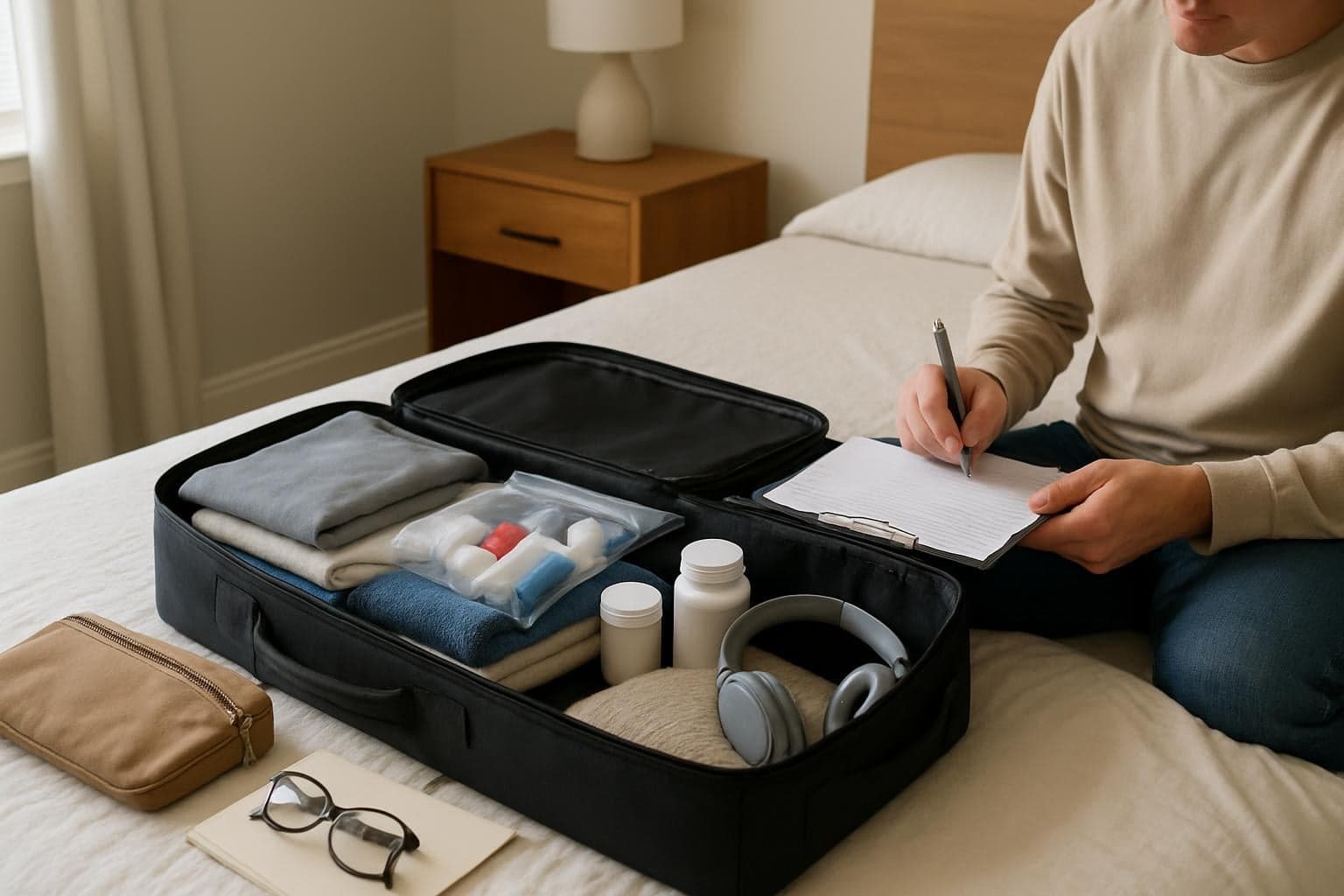
What to Pack for Rehab: Complete Checklist
Preparing for residential treatment can feel overwhelming, especially when different programs have different rules. A simple rehab packing list can make admission day calmer and he…

Sober Living Homes: What They Are & How to Choose One
A sober living home is a substance-free shared residence where people can build stability, routines, and supportive relationships during recovery. It can provide a practical bridge…

How to Stage an Intervention: Step-by-Step Guide
When someone you care about is living with addiction, it is natural to want one conversation that changes everything. An intervention can create an opportunity to accept help, but…