
10 of the World's Best Luxury Rehab Centers
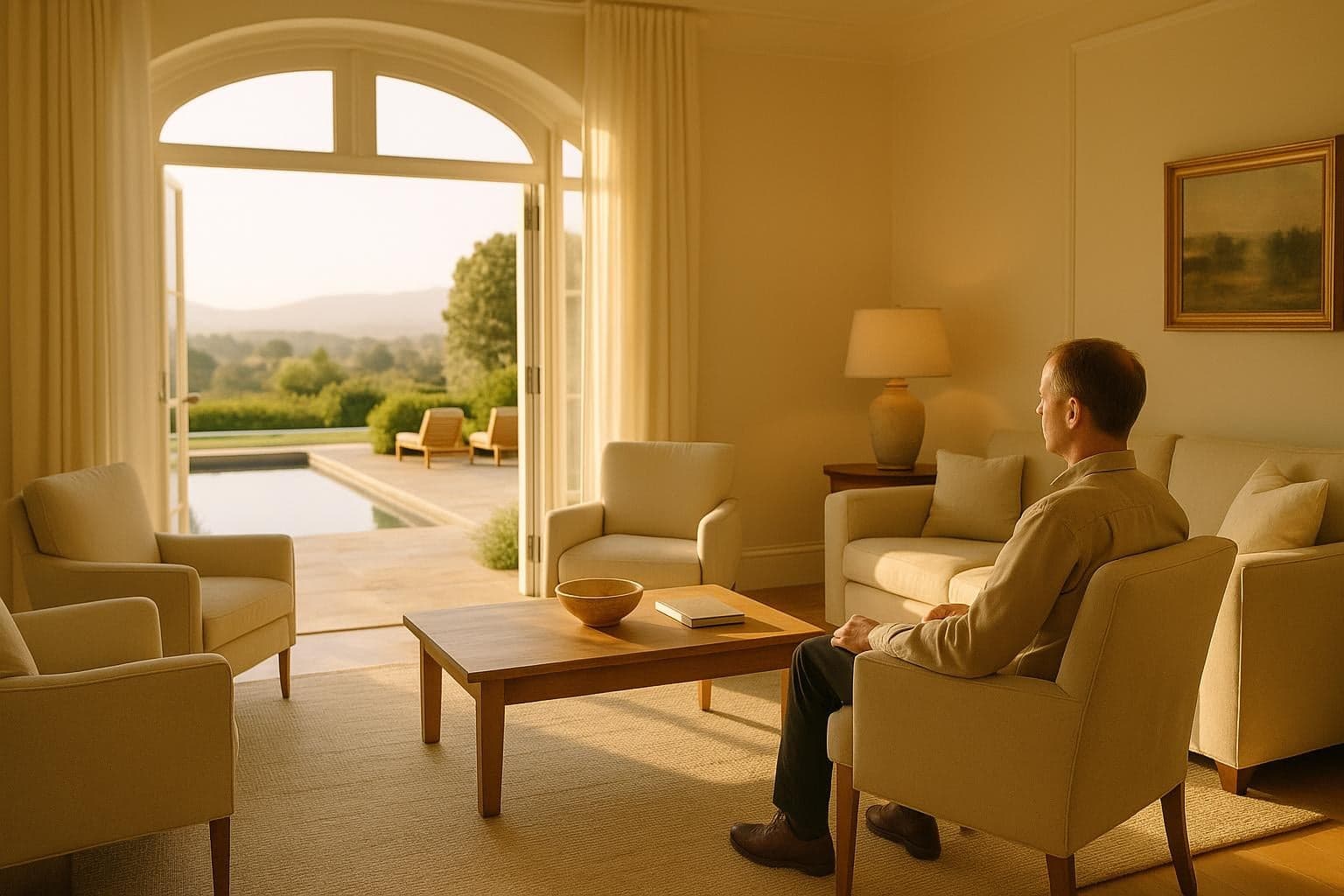
The best luxury rehab centers offer more than attractive rooms and peaceful surroundings. At their strongest, they combine credible clinical treatment with privacy, individualized care, experienced staff and practical support for life after discharge. However, a high price or resort-like setting does not automatically indicate high-quality addiction treatment.
This independent editorial roundup profiles 10 real facilities around the world, each selected for a particular strength. No facility paid for inclusion, and placement does not constitute a clinical endorsement. Program details and published prices were reviewed in August 2026, but availability, costs and services can change. Always confirm the current information directly with the facility and consult a doctor or qualified clinical team about the appropriate level of care.
What luxury rehab actually means and who it is for
Luxury rehab usually describes private addiction treatment that combines residential clinical care with enhanced comfort, discretion and personalization. Common features include private accommodation, chef-prepared food, scenic grounds, wellness services and more individual attention than may be available in a larger program. The most exclusive rehab programs may treat one client at a time or provide a dedicated residence and multidisciplinary team.
Amenities can make an extended stay more tolerable, but they are not substitutes for medical assessment, licensed clinicians, evidence-based therapy or continuing care. A strong luxury program should still provide the fundamentals discussed in What Is Rehab? A Complete Guide to Addiction Treatment, including an appropriate assessment, a structured treatment plan and preparation for recovery after discharge. Our separate Luxury Rehab: What Makes It Different guide explores this category in more detail.
- People with significant privacy or security concerns, including public figures and senior professionals
- People who need integrated care for addiction and co-occurring mental health conditions
- Families seeking a specialist program for trauma, adolescence or repeated relapse
- International clients who want residential treatment away from familiar triggers
- People who can afford self-pay care or have confirmed insurance benefits for part of the clinical treatment
Do not travel or stop using substances without medical advice
Withdrawal from alcohol and some drugs can become medically dangerous. NIAAA warns that suddenly stopping prolonged heavy drinking can cause seizures, delirium and other life-threatening complications. Speak with a doctor or the facility's clinical admissions team before attempting detox or boarding a flight for treatment. Call emergency services if severe withdrawal, overdose, breathing difficulty, seizures or loss of consciousness occurs.
How we chose this list
This is an independent editorial selection rather than a universal league table. No facility paid Rehab Explore for inclusion. We reviewed official program information available in August 2026 and looked for a genuine point of distinction, such as a single-client model, specialist youth services, trauma expertise, published pricing or a strong hospital-based clinical team.
We also considered whether each center described medical or psychiatric involvement, individual treatment planning, recognized therapies, aftercare and transparent information about its setting or target population. SAMHSA recommends checking licensing or accreditation, staff qualifications, evidence-based practices, family involvement, medication options and long-term recovery support. Those factors matter more than marble bathrooms, celebrity associations or unverified success-rate claims.
The 10 editorial picks at a glance
| Facility | Location | Our standout category | Published price information |
|---|---|---|---|
| Paracelsus Recovery | Zurich, Switzerland | Privacy and discretion | CHF 95,000 per week for its four-week residential program |
| The Dawn Rehab | Chiang Mai, Thailand | Value luxury | Programs advertised from about US$9,000 per month |
| The Wave Clinic | Kuala Lumpur, Malaysia | Teens and young adults | Personalized quote required; older program literature should not be treated as a current quote |
| The Guest House Ocala | Florida, United States | Trauma-focused care | Contact admissions for current pricing |
| All Points North Lodge | Colorado, United States | Mountain and nature setting | Benefits verification and self-pay options available |
| Passages Malibu | California, United States | Holistic, non-12-step care | Contact admissions for current pricing |
| White River Manor | South Africa | Executives and high performers | All-inclusive treatment advertised from US$15,000 for 28 days |
| McLean Fernside | Massachusetts, United States | Evidence-based clinical care | US$70,500 for 30 days; self-pay |
| The Kusnacht Practice | Zurich, Switzerland | Diagnostics and complex presentations | Bespoke quote required |
| Ibiza Calm | Ibiza, Spain | Small European residential program | Bespoke quote required |
Prices in this article are informational snapshots, not guaranteed quotes. Ask every center for a written estimate covering detox, psychiatric care, medications, laboratory work, outside appointments, transport, extended stays and aftercare before paying a deposit.
1. Paracelsus Recovery: best for overall privacy and discretion
Paracelsus Recovery in Zurich is our privacy pick because its residential clinic uses a one-client-at-a-time model. The facility says each client receives support from a team of at least 15 professionals, with a live-in therapist and many hours of individual work. This is materially different from simply offering a private room within a conventional group program.
Its published four-week residential price is CHF 95,000 per week. The listed package includes a private residence, medical and psychological assessment, laboratory and genetic testing, nutritional and sleep review, complementary therapies and round-the-clock support. That makes it one of the costliest options in this roundup and a potential fit primarily for people whose privacy, security or scheduling requirements rule out shared treatment.
Prospective clients should still ask how detox emergencies are handled, which therapies will address their particular Types of Addiction: A Complete Guide, and how the clinical team coordinates continuing care at home. Extreme personalization can be valuable, but some people benefit from the peer connection available in a carefully managed therapeutic community.
2. The Dawn Rehab: best value luxury pick
The Dawn Rehab is a riverside residential center in Chiang Mai, Thailand. It combines private ensuite rooms, wellness activities and a resort-style environment with addiction, mental health and trauma programs. The facility states that it is licensed by Thailand's Ministry of Public Health and accredited by CARF, an independent health and human-services accreditor.

The Dawn advertises programs starting at about US$9,000 per month, although the final quote depends on program intensity and length. Its fees generally include accommodation, food, psychotherapy, wellness activities and excursions, while special medications, transcranial magnetic stimulation and unexpected medical treatment may cost extra. For that reason, it represents value within the luxury category rather than low-cost treatment overall.
International treatment also creates practical questions about flights, visas, language, insurance reimbursement and follow-up across time zones. The center provides English-language care and online aftercare groups, but families should compare the total door-to-door cost with local options using Choosing Rehab Abroad: International Treatment Guide and How Much Does Rehab Cost? Complete Price Guide 2026.
3. The Wave Clinic: best for teens and young adults
The Wave Clinic in Malaysia is the specialist youth pick. Its residential services are designed for teenagers and young adults experiencing addiction, trauma, eating disorders and other mental health concerns. The program combines psychiatric and therapeutic care with education, vocational learning, family work, life skills and community projects.
This broader developmental emphasis matters because adolescent treatment should not be an adult rehab curriculum placed in a younger-looking building. The Wave describes access to child and adolescent psychiatry, medical monitoring, DBT-informed work, trauma-focused therapies and individualized educational planning. Its admissions process includes a psychiatric and clinical assessment to determine whether it can safely meet a young person's needs.
Parents should request the current minimum stay, total quote, safeguarding policies, family-contact arrangements and written details of academic provision. They should also verify the credentials of every professional responsible for medical, psychiatric and educational care. For a minor or vulnerable young adult, suitability and safeguarding are more important than destination or décor.
4. The Guest House Ocala: best for trauma-focused care
The Guest House Ocala provides residential addiction and mental health treatment on a private 52-acre estate in Silver Springs, Florida. Its defining focus is trauma, including complex, developmental and relational trauma that may occur alongside substance use, anxiety, depression or other emotional and behavioral difficulties.
The center describes a mixture of individual and group therapy, EMDR, somatic approaches, psychodrama, equine work, expressive therapies, yoga and adventure-based activities. Its residential program generally serves people who need structure, have complex histories, lack a supportive home environment or have not responded well to less intensive care. Typical stays may range from 30 to 90 days according to the program's own information.
Trauma language is widely used in rehab marketing, so ask what it means in day-to-day practice. Useful questions include who conducts trauma therapy, what qualifications they hold, how stabilization is handled before intensive processing and what happens if symptoms worsen. Compare the modalities offered with the evidence and limitations covered in Types of Therapy Used in Addiction Treatment.
5. All Points North Lodge: best mountain and nature setting
All Points North Lodge, often called APN Lodge, is located in Edwards, Colorado, in the mountains near Vail. The setting offers a distinct sense of separation from everyday pressures, with mountain views and access to seasonal outdoor activities. Accommodation options listed by APN range from double suites to private suites and a private residence.
The broader APN network provides addiction, trauma and mental health services across several levels of care. The Edwards location offers residential and partial hospitalization services, while medical detox is provided at APN's Denver and Dallas-Fort Worth campuses. Therapies described by APN include CBT, DBT, EMDR, individual and group therapy, mindfulness and experiential work.
A beautiful setting can support sleep, movement and focused reflection, but it should not determine placement by itself. Confirm whether detox is required before transfer to Edwards, which services occur at the Lodge, and how a move between campuses would be managed. The appropriate sequence should follow a clinical assessment and the principles in Levels of Care in Addiction Treatment: Detox to Aftercare.
6. Passages Malibu: best for a holistic, alternative approach
Passages Malibu is a long-established California residential program known for one-to-one, holistic and non-12-step treatment. Its published team model includes medical, psychiatric, psychological and family-therapy professionals alongside chemical-dependency counseling, acupuncture, hypnotherapy, fitness and spiritual support.
The program may appeal to people who want an alternative to a primarily 12-step schedule or who value a broad menu of complementary practices. Its official information lists psychotherapy, continuing-care planning, art therapy, meditation, yoga, music, massage and other mind-body activities. Passages also states that its adult residential alcohol and drug program is licensed by the California Department of Health Care Services.
Holistic should mean whole-person care, not the replacement of established medical treatment with unsupported claims. Ask which therapies form the clinical core, how progress is measured, and whether medications for alcohol or opioid use disorders are available when medically appropriate. A doctor should review any supplement, medication or intensive wellness intervention for safety and possible interactions.
7. White River Manor: best for executives and high performers
White River Manor is a luxury addiction, trauma and wellness center in South Africa's Lowveld. It offers a private lodge environment and explicitly addresses the needs of executives dealing with addiction, burnout, stress, anxiety or depression. Its setting may suit professionals who need distance from workplace demands while retaining a high level of comfort and privacy.
The center's international package is advertised from US$15,000 for 28 days. The listed inclusions cover personalized therapy and counseling, life coaching, accommodation in a private villa, meals prepared by an executive chef, airport transfers, recreational activities and aftercare planning. Separate wellness programs for executive burnout are offered in 7-, 10-, 14- and 21-day formats, but a short wellness stay should not be confused with comprehensive addiction treatment.
Executives should ask whether work devices are permitted, how confidentiality is managed, and whether the program can address stimulant use, alcohol use, sleep disruption and co-occurring mental health symptoms together. Returning to the same workload without structured aftercare can quickly recreate the pressures that contributed to the crisis.
8. McLean Fernside: best for evidence-based clinical excellence
Fernside is a nine-bed residential addiction program operated by McLean Hospital in Princeton, Massachusetts. It pairs private rooms and a country-inn environment with clinicians affiliated with McLean and Harvard Medical School. The multidisciplinary team includes psychiatrists, psychologists, nurses, licensed clinical social workers and residential counselors.
The seven-day-a-week program uses approaches including cognitive-behavioral relapse prevention, motivational enhancement therapy, DBT and integrated group therapy for co-occurring mood and substance use disorders. Services include diagnostic assessment, physical examination, medication evaluation, individual and group therapy, family meetings, case management and aftercare coordination.
Fernside publishes a fee of US$70,500 for 30 days and states that it is a self-pay program that does not accept insurance or third-party reimbursement. It does not provide detox on site, although admissions staff can help arrange detoxification beforehand. This separation makes it especially important to establish the complete care pathway before admission rather than viewing one residential stay as the entire treatment plan.
Explore Rehabs by Location
Frequently Asked Questions
Yes, insurance may cover medically necessary addiction and mental health services delivered within a luxury facility, but it rarely pays for every premium feature. US Marketplace plans include substance use disorder and mental health treatment as essential health benefits, although networks, prior authorization, deductibles and covered levels of care vary. Private rooms, upgraded accommodation, travel, spa services and other non-clinical extras may remain self-pay. Ask both the insurer and facility for written benefit details, including in-network status, authorized days, exclusions and your estimated out-of-pocket amount. See Does Insurance Cover Rehab? Complete Guide for a fuller explanation.
Related Articles

Dual Diagnosis Treatment Programs Explained
A dual diagnosis treatment program supports someone who has both a substance use disorder and a mental health disorder. Clinicians often use the term “co-occurring disorders” becau…
Luxury Rehab: What Makes It Different
Luxury rehab centers combine addiction treatment with a more private, comfortable and highly personalized residential experience. Depending on the program, this may mean a private…

Inpatient vs Outpatient Rehab: Which Is Right for You?
Choosing between inpatient and outpatient rehab is not a test of how serious you are about recovery. It is a clinical and practical decision about which setting can provide enough…